I had never heard of mathematical tiles until I visited Lewes last summer. They sound very complicated don’t they? In truth, they are beautiful tiles that hang vertically, each row overlapping the row below, a bit like weatherboarding or roof shingles.
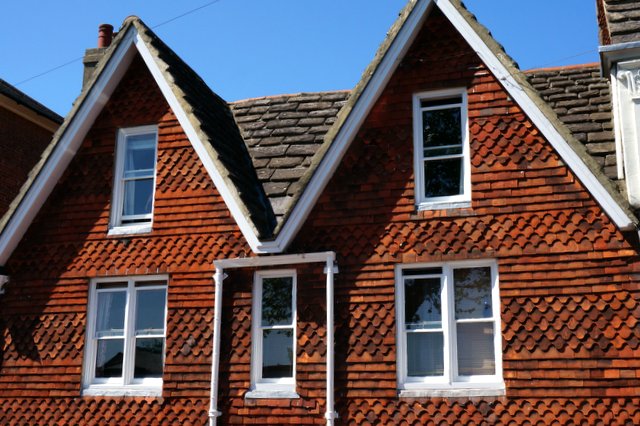
Many of the older houses in Lewes appear to be built of brick, but upon closer inspection they yield their secret: they are, in fact, faced with tiles.
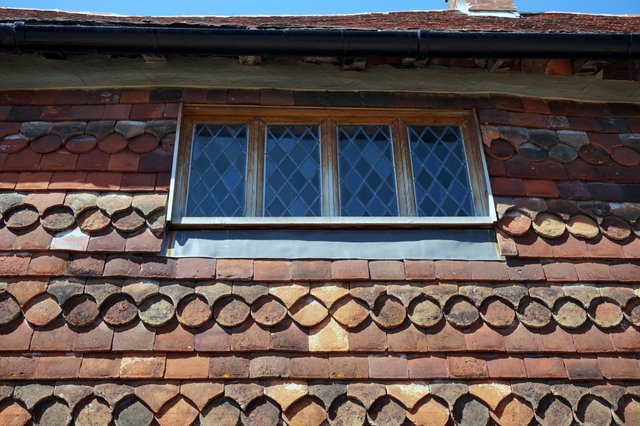
These tiles were designed specifically to resemble bricks and were often brick red in colour, though glazed black tiles were popular too. The tiles became popular during the 18th century and were usually used to clad timber-framed houses so that they looked as if they were built in brick. It seems that the popularity of these mathematical tiles was largely due to fashion; brick houses were in vogue and this was an easy way to give a timber framed house a fashionable facelift.
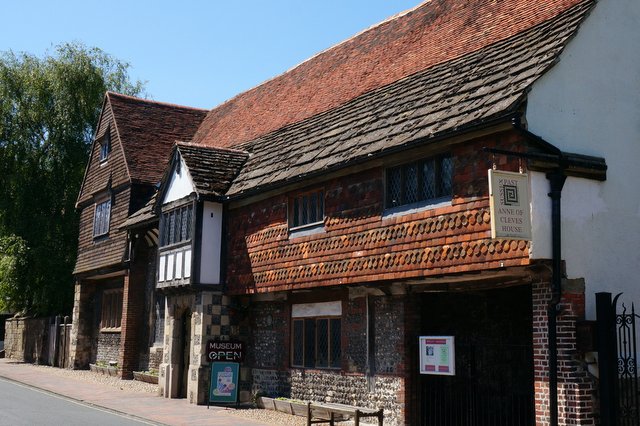
They were particularly popular in the southeastern counties of England, especially East Sussex and Kent, and it may have been down to more than fashion in these areas. On a practical level, these tiles were adept at protecting timber from the salt and damp of sea spray.

Linked to Thursday Specials and Lingering Look at Architecture.


 Travel with Intent
I’ve seen such tiling on roofs in Essex, though there they go for pargetting for vertical surfaces. Here in Wales it’s the more easily obtained slate that was used for weather protection of course. Great historical summary, thanks!
LikeLike
What a marvelous idea. I would love to see it in person. So, this house dates back to 18th century? 🙂 Debbie, I am impressed with this find and your post. Thank you, girl!
LikeLike