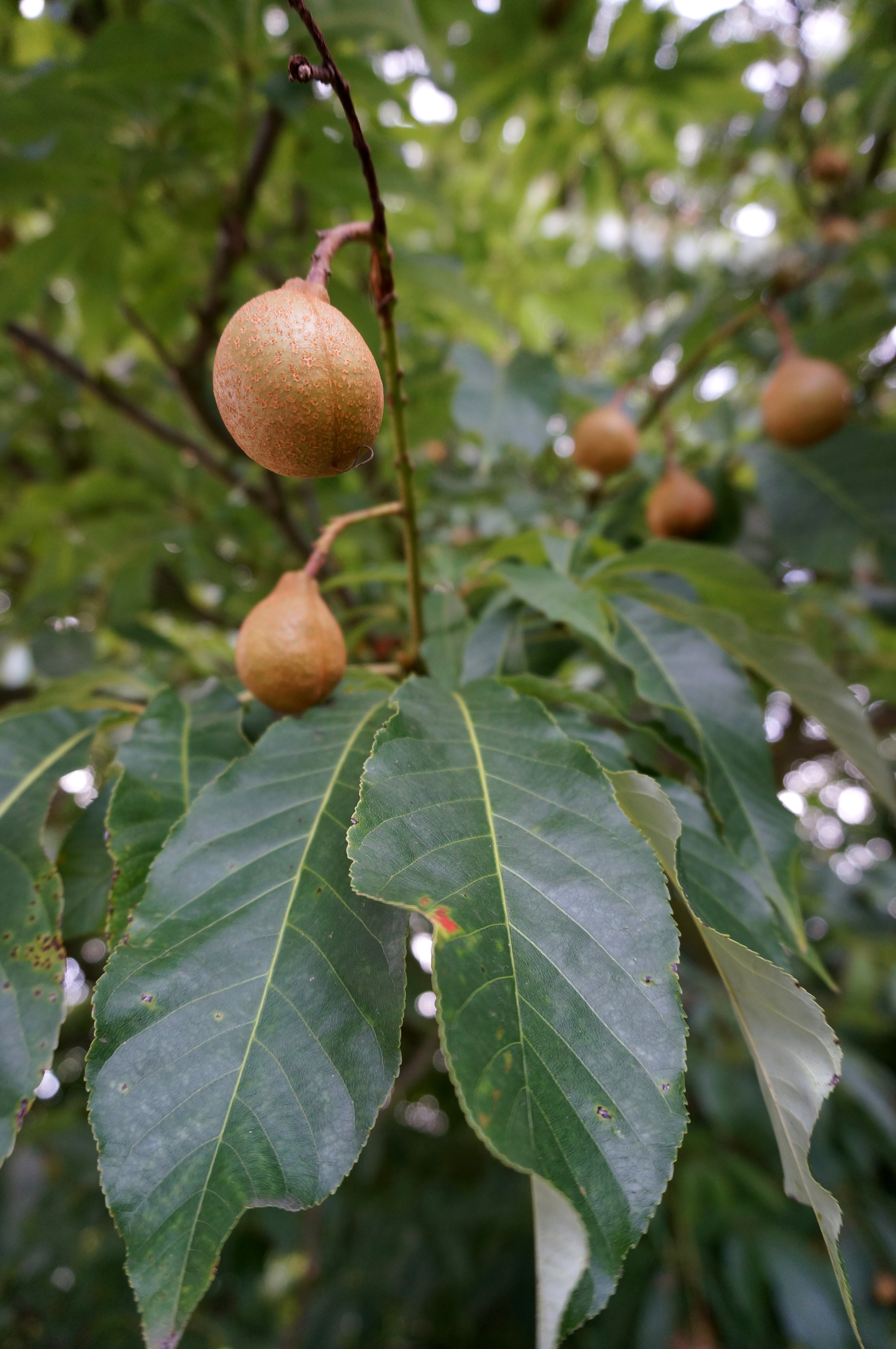
This is the Indian Horse Chestnut, clearly distinguishable by its thin, smooth-skinned conker cases. Best avoided if you’re planning a conker fight.
And don’t be tempted to eat them either. Although some animals, deer and squirrels amongst them, are quite partial to these seeds, they are poisonous to humans as they contain aesculin, which destroys red blood cells. That said, In India, Indian horse chestnut seeds are ground into flour, steeped to get rid of the toxins, and used for flatbreads or porridges.
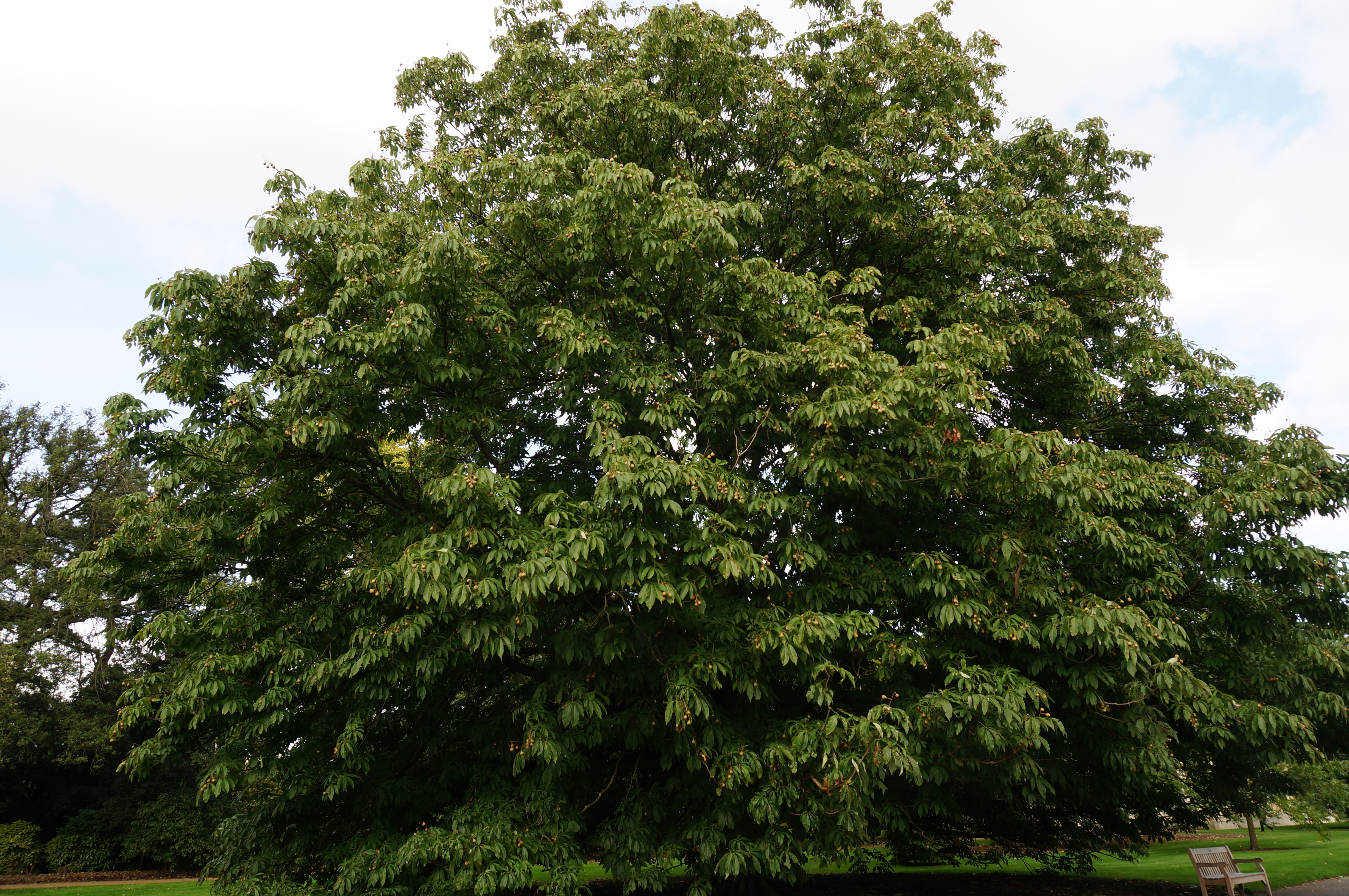
Conkers apart, it is a majestic tree, with a rounded canopy shape, large glossy leaves and beautiful spiky flowers from May to July.
It can grow to about 30 m tall and spread to about 12 m wide.


All of the photos in this post were taken in Kew Gardens in October 2013.
Linked to the Festival of Leaves.


 Travel with Intent
Thank you for putting information about humans not to eat them… I just found a great chestnut tree by my house in the woods and was about to try “Chestnuts roasting on an open fire” .. Until I notices they did not have spines on the outer hull.. Your pictures showed the bare husk of the Indian Conkers and the warning humans not to eat them…..thank you for putting the warning out there !
LikeLike
Well, I’m always happy to help!
not something I would have known without the help of Kew Gardens
LikeLike
The fruit and leaves of the Horse Chestnut here in the UK look very different.
LikeLike
Amazing entry this week Debbie! One can always learn a lot about plants when you’re taking part! 😀 Thanks so much for sharing and enjoy your weekend!!!
xoxo
LikeLike
Thanks Verena. It’s a fun challenge that makes me learn too.
LikeLike