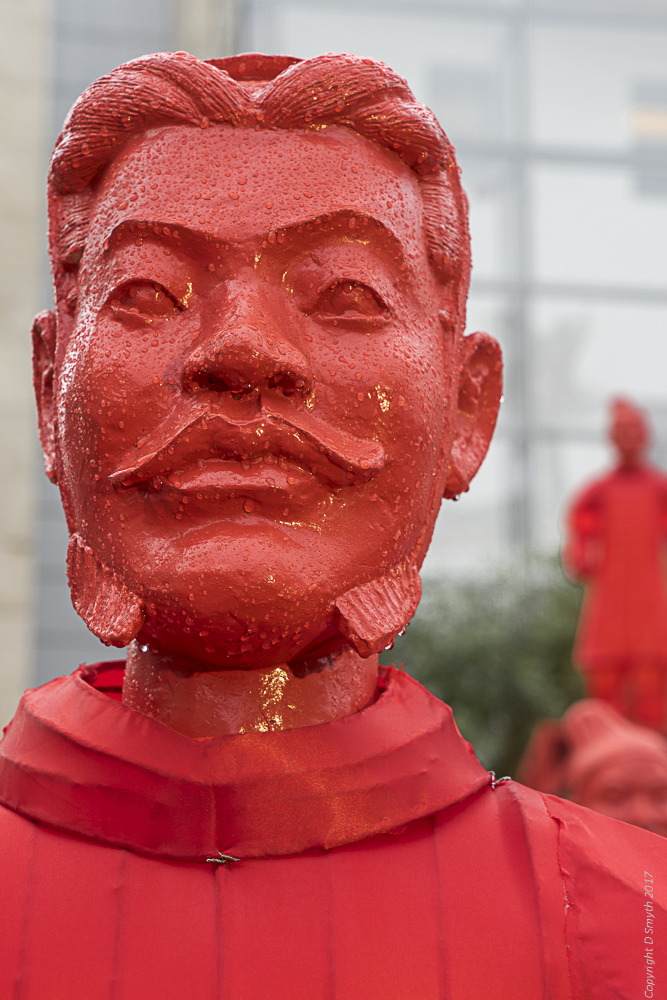
Chinese warrior, Manchester, January 2017
The massive collection of terracotta sculptures of the armies of the first Emperor of China sits high on the to-see list of many visitors to China.
It is estimated that thousands of members of this Terracotta Army were buried with the emperor in 210–209 BCE and were discovered in 1974 by local farmers in Xi’an. Around 8,000 warriors plus accompanying chariots and horses have been excavated, whilst other soldiers and a variety of non-military figures, including acrobats, strongmen and musicians, remain hidden.
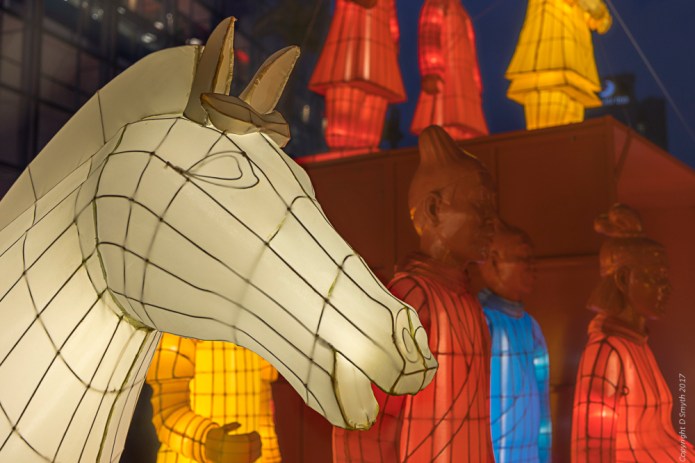
In 2008, in a commission for the Beijing Olympics, the concept of solid terracotta warriors was repurposed to create giant radiant figurines. The serious attackers and defenders were merged with the Chinese tradition of illumination. The lantern army was expanded to include women and children arranged in family groups, including one heavily pregnant woman.
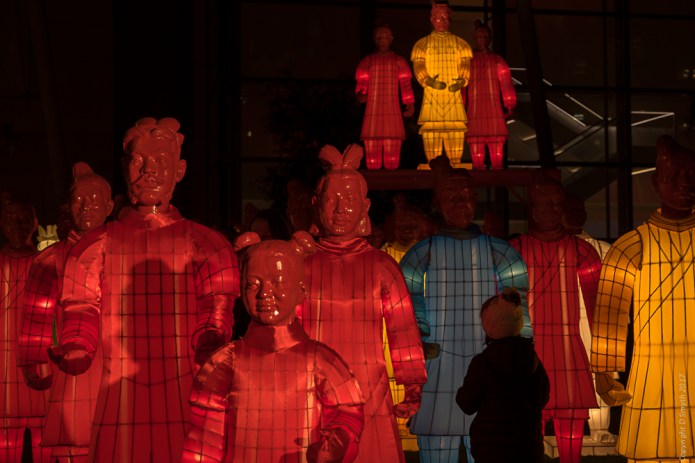
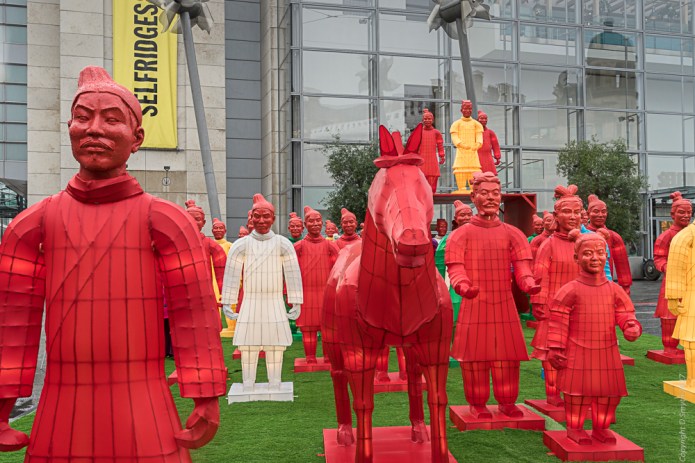
These lanterns have travelled the world since the Olympics, and formed part of the Chinese New Year celebrations in Manchester this weekend (26-29 January 2017).
As for the ancient terracotta version, they will be appearing at Liverpool’s World Museum from February to October 2018.
 Copyright Debbie Smyth, 30 January 2017


 Travel with Intent
Trip to Liverpool on the horizon?
LikeLike
Definitely! My travels have never got me to the real thing and I missed them when they came to London.
On Mon, Jan 30, 2017 at 1:19 PM, Travel with Intent wrote:
>
LikeLiked by 1 person
What a neat idea, and a great way to share a touch of culture with everywhere they visit.
LikeLike
You’re right there – a good way to spread culture in a fun and family friendly manner
LikeLiked by 1 person
Great photos. We saw these in Manchester last week.
LikeLike
What an amazing sight, Debs! Your photos are truly stunning! Good old rainy Manchester 🙂 🙂
LikeLiked by 1 person
And I forgot to take an umbrella with me! It was these warriors that had made me go to Manchester this weekend – they didn’t disappoint. Though I also have a load of useless photos – very hard to capture well at night
On Mon, Jan 30, 2017 at 8:05 AM, Travel with Intent wrote:
>
LikeLike
These are beautiful! 🙂
LikeLiked by 1 person
Wonderful photos Debbie 🙂 Looks well worth a visit.
LikeLiked by 1 person